Building a Multi-Source Compliance Reasoning Agent for Insurance KYC
{{info-banner}}
Company profile
The client is an insurance group operating in Europe, in a jurisdiction with some of the most demanding compliance and data-residency standards. Its KYC and onboarding operations span multiple languages, multiple document systems, and multiple regulatory frameworks — every decision needs to be defensible under audit.
As volumes grew, the operational cost of running KYC through manual cross-system review became a material constraint on how fast the business could onboard and maintain clients.
The challenge
Before working with Flexy, the client's KYC workflows relied on compliance officers manually stitching together information from fragmented document systems and legal references. Each case required opening several systems, interpreting documents in different languages, and reasoning through compliance rules by hand.
This created structural problems:
- Distributed, unstructured document sources. Relevant evidence lived across multiple internal systems, external registries, and archived files in varied formats and languages.
- Manual cross-system verification. Officers reconciled identity, policy, and risk data across systems by hand, introducing latency and room for inconsistency.
- Slow compliance reasoning. Evaluating rules against evidence across legal and operational datasets was an expert-intensive task that didn't scale with growth.
- Audit overhead. Every decision had to be explainable — but with manual workflows, reconstructing the reasoning trail after the fact was itself labor-intensive.
The challenge wasn't to "automate compliance" with brittle rule scripts. It was to build a system capable of reasoning across fragmented sources while producing outputs that hold up to regulatory scrutiny.
Solution
Flexy designed and built an autonomous compliance reasoning agent that unifies document understanding, performs cross-source verification, and produces structured, explainable risk assessments in real time.
The system acts as a reasoning layer over the client's existing document and policy landscape — not a replacement for it — so compliance officers move from doing the verification work themselves to reviewing evidence-grounded outputs the agent has already assembled.
What the system does
- Ingests and normalizes multilingual documents from across internal and external sources.
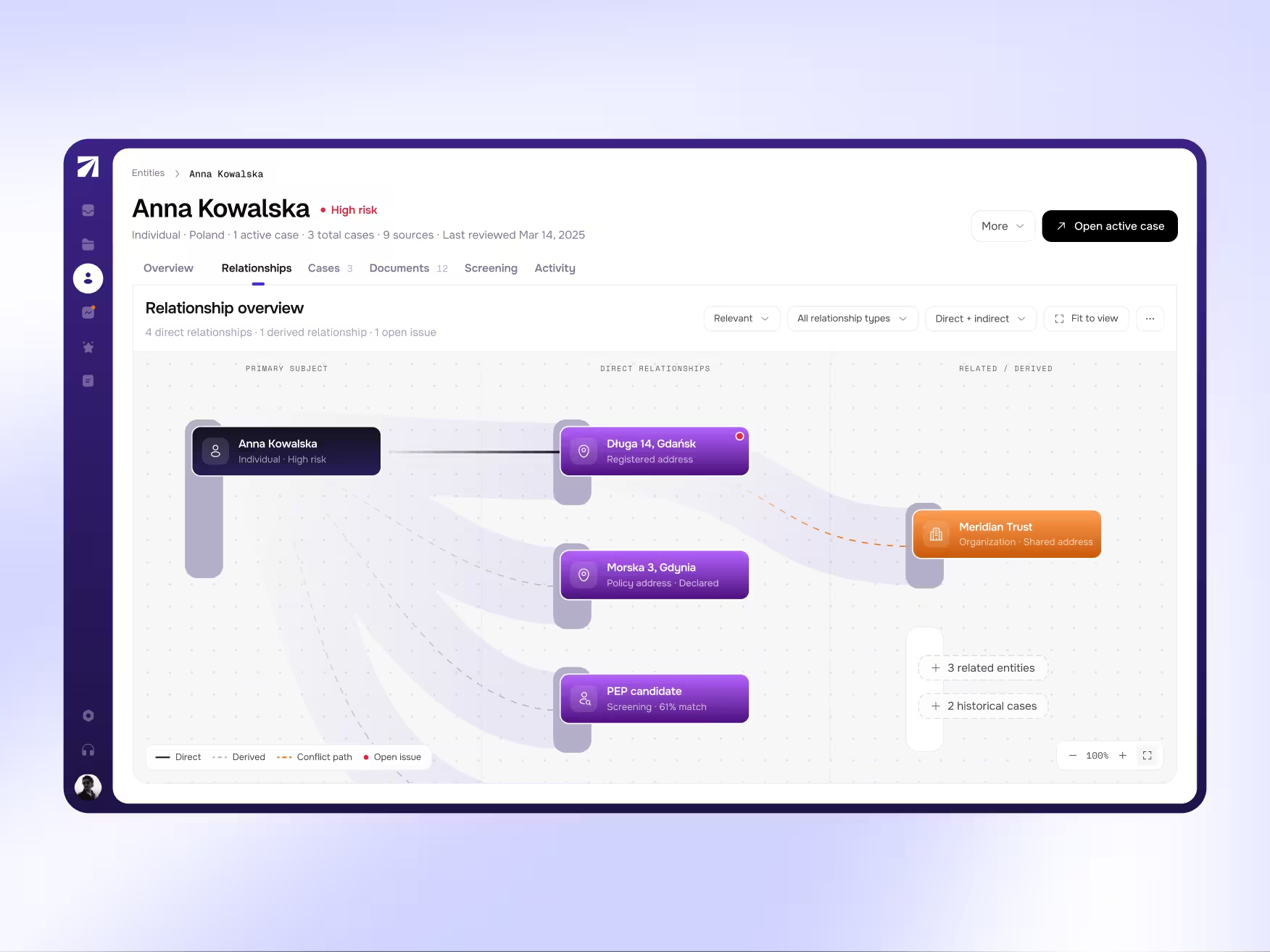
- Links identity, policy, and risk data across systems into a unified knowledge layer.
- Reasons over compliance rules and evidence using an LLM reasoning agent (Nemotron-based) and a library of 200+ tools for verification, enrichment, and cross-checking.
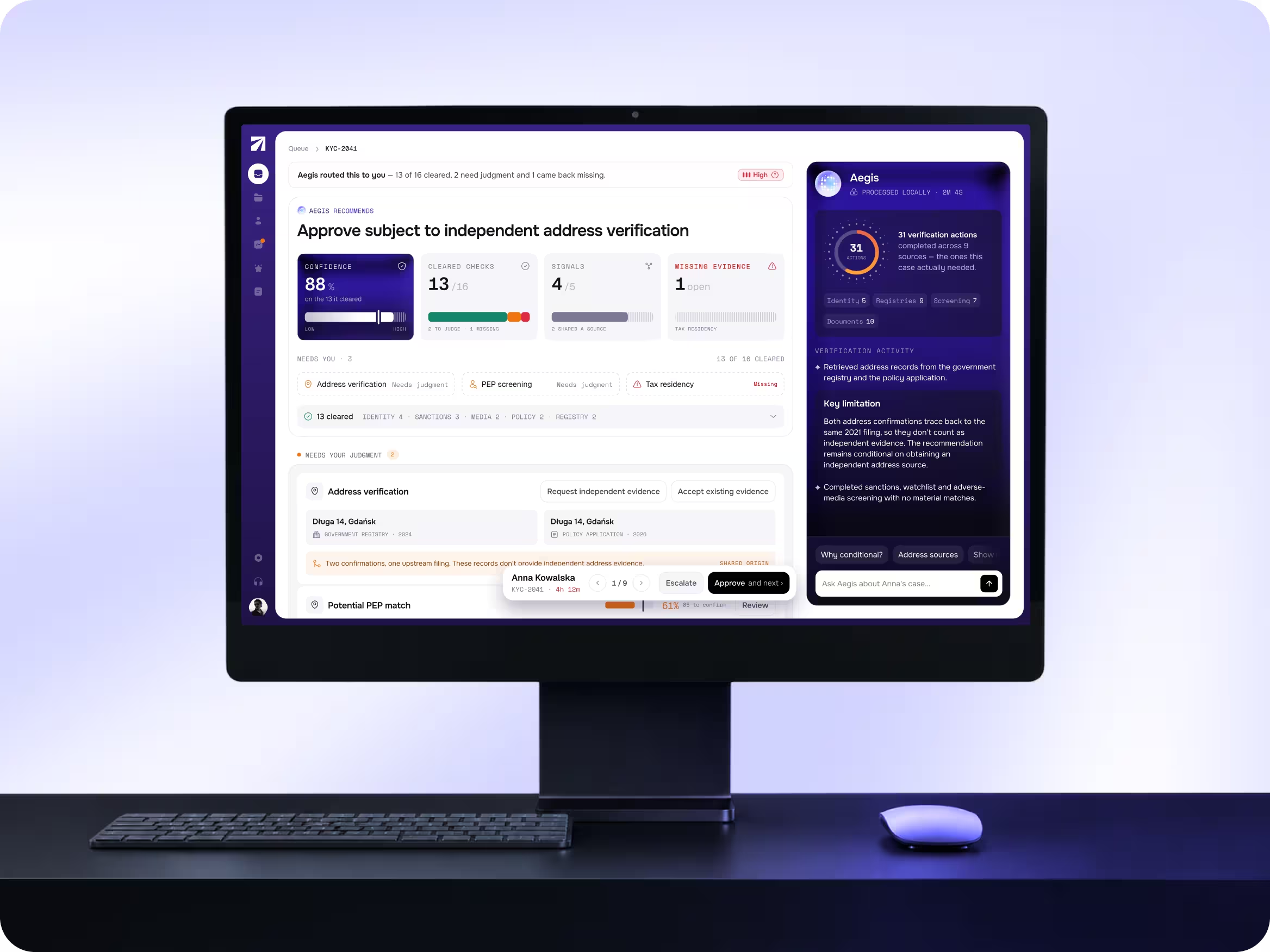
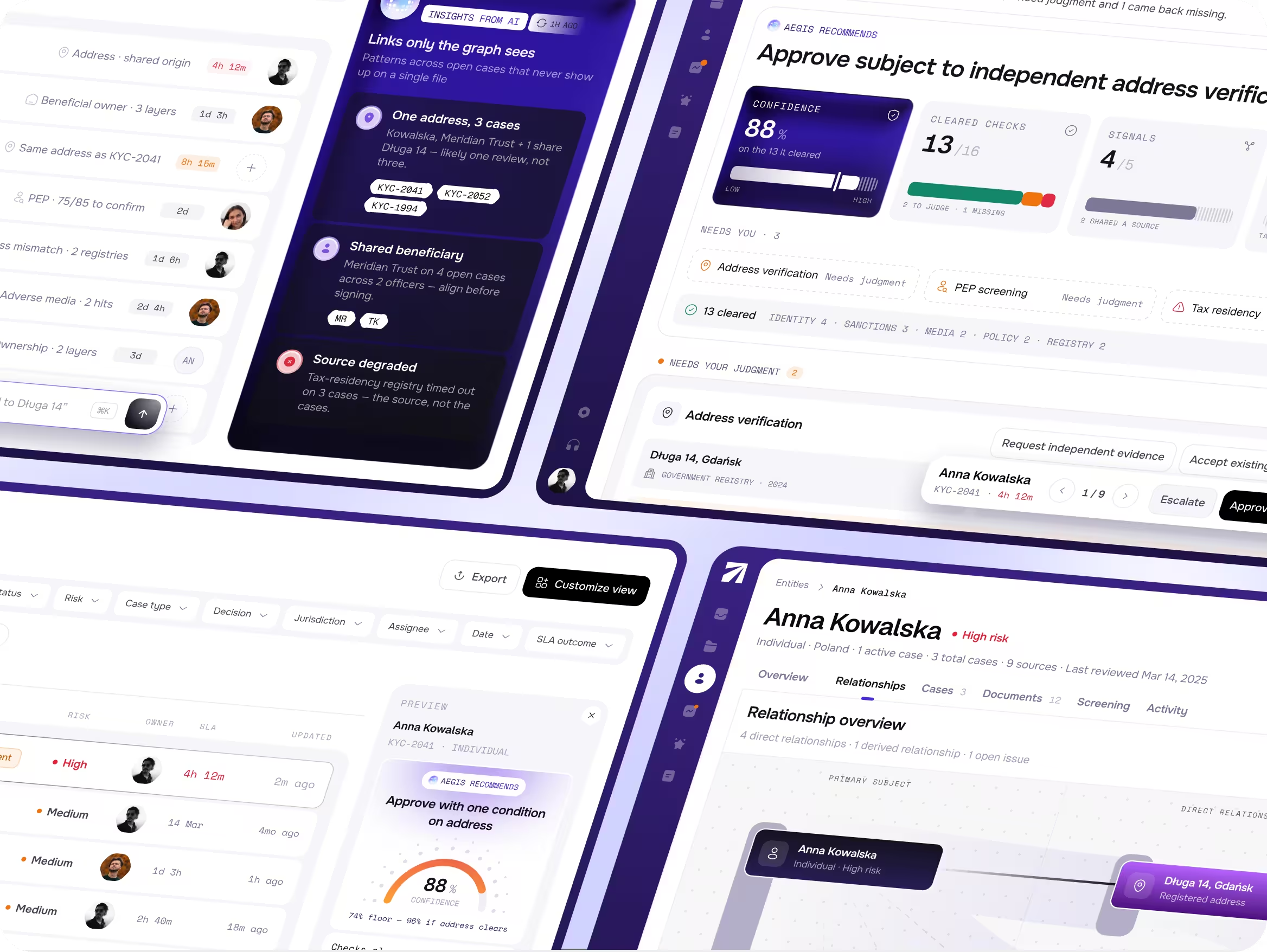
- Outputs structured KYC assessments with explicit risk scores, evidence links, and reasoning traces — every conclusion tied back to its source.
The architecture combines graph-style retrieval across documents and systems, multi-tool agent orchestration for verification workflows, and a RAG + rule hybrid reasoning layer so rule-based compliance logic and contextual evidence work together rather than against each other.
Flexy's approach
Flexy treated this as a regulated-AI problem: the bar was not only technical performance, but explainability, traceability, and data residency from day one.
Discovery (compliance workflow mapping). Flexy mapped how KYC actually runs day to day — which systems officers consult, which documents drive decisions, where the slowest reasoning steps occur, and where audit evidence is most often reconstructed after the fact. This shaped what the agent needed to reason over and what it needed to record.
Architecture (agentic reasoning system). Next came the system blueprint: a multilingual ingestion pipeline, a vector-based knowledge layer unifying document retrieval, an LLM reasoning agent built on Nemotron models, a large-scale tool-calling framework with 200+ specialized verification tools, and continuous monitoring and validation pipelines to catch drift.
Deployment (local, residency-compliant infrastructure). To satisfy EU data-residency requirements, the entire system was deployed on fully local infrastructure inside the client's environment — no customer data or documents leave their perimeter.
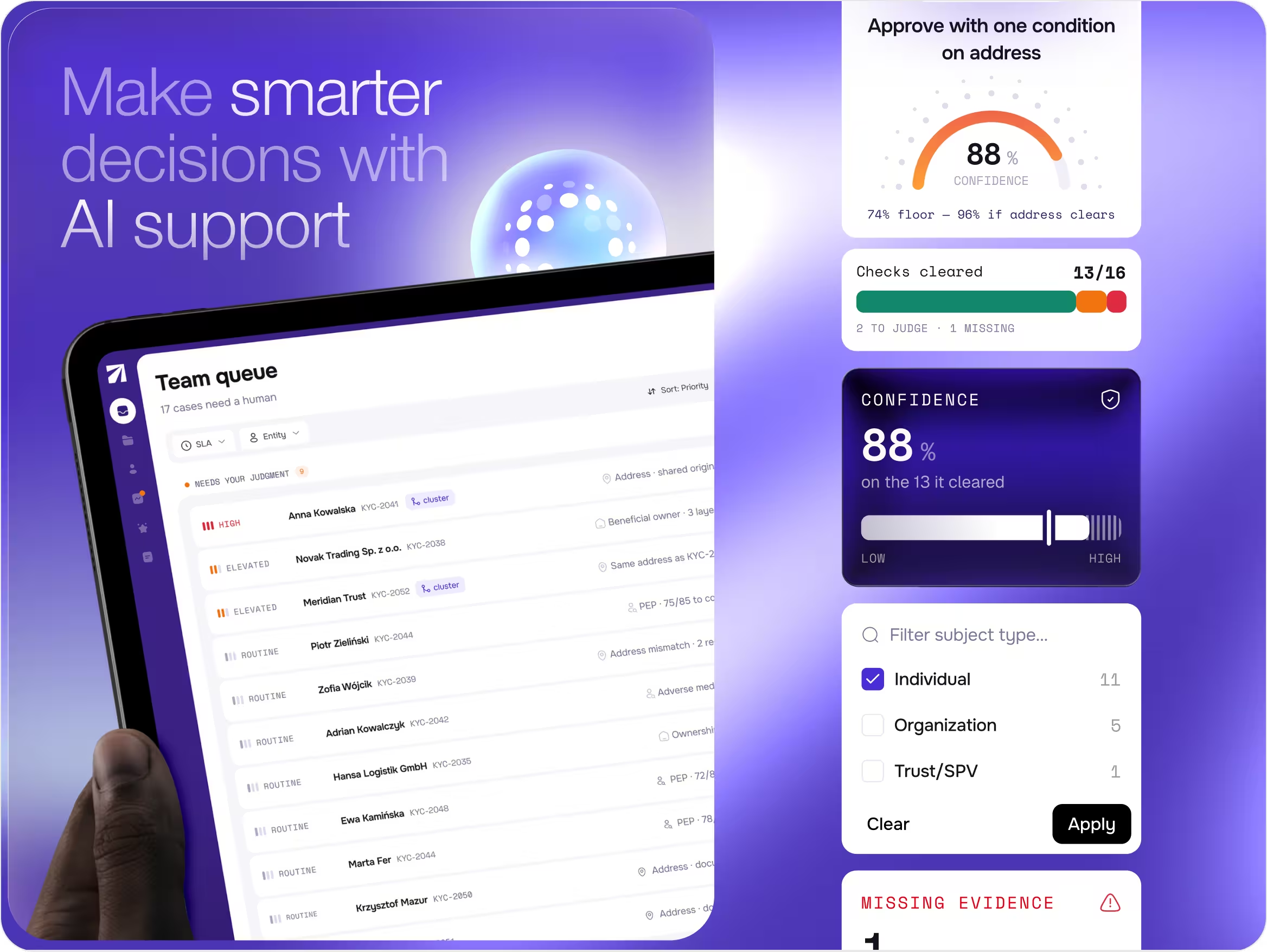
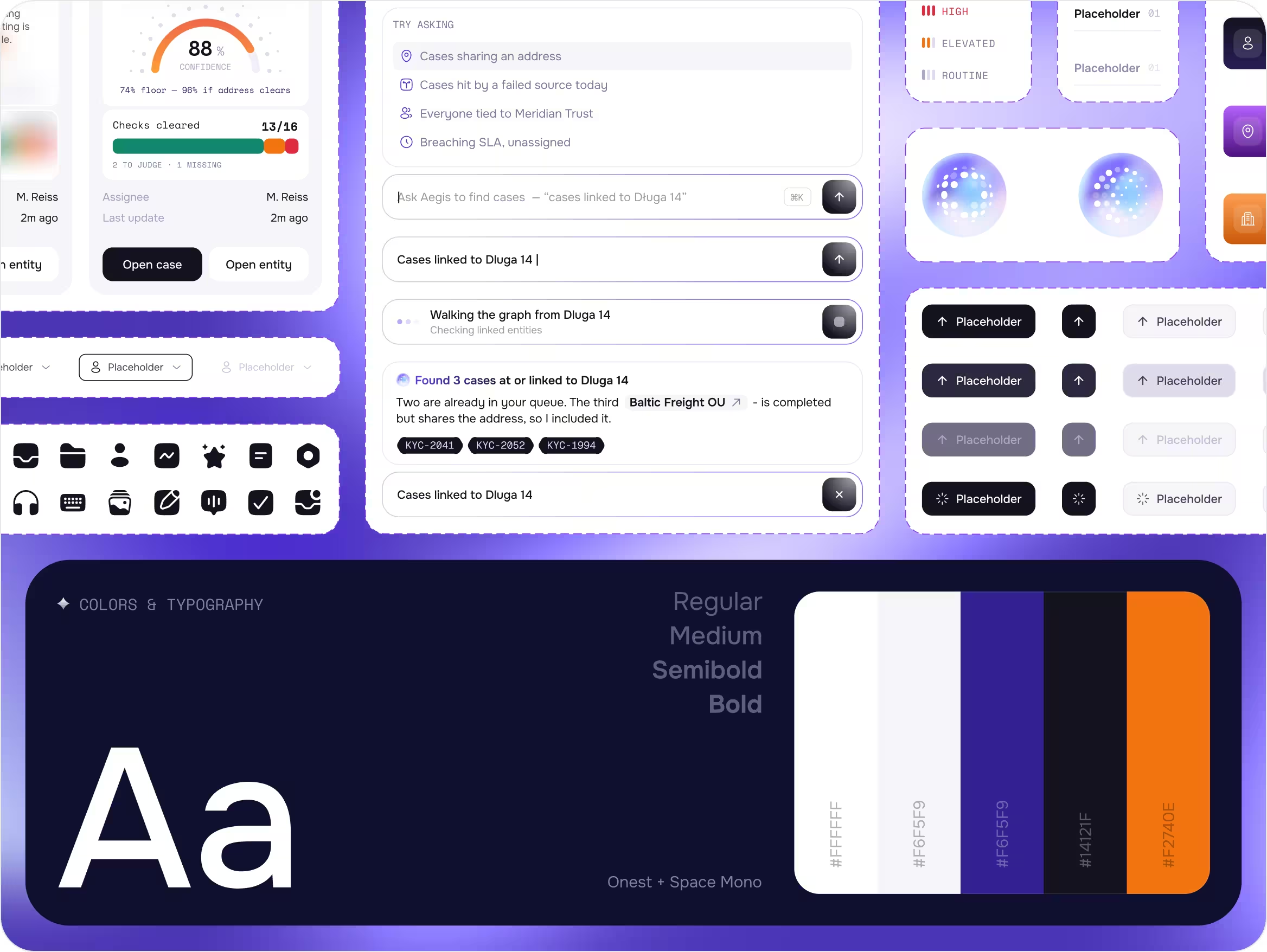
Experience design (compliance officer's workflow). Flexy designed the officer-facing surface as a chat/email-based compliance interface that returns structured KYC outputs, risk scores with explicit evidence links, and visible reasoning traces. Officers review and approve rather than reconstruct.
Technical details
- We use Nvidia Nemo framework for LLM processing and tool calling
- Neo4J for a knowledge graph
- PGvector for semantic search and RAG
- FAST API and Postgres were used for backend services
- React.js in the frontend
Deliverables
- Autonomous compliance reasoning agent deployed on fully local, residency-compliant infrastructure
- Multilingual document ingestion and normalization pipeline
- Vector-based knowledge layer unifying retrieval across internal systems and document stores
- LLM reasoning agent built on Nemotron models, tuned for compliance-grade reasoning
- Tool-calling framework with 200+ verification and enrichment tools
- Chat/email-based compliance interface for officers, with structured KYC outputs and evidence links
- Continuous monitoring and validation pipeline for ongoing quality, drift, and accuracy tracking
The results
The agent turns KYC from a manual reconciliation task into a reviewable, evidence-grounded output. Compliance officers now spend their time on judgment and exceptions rather than on document hunting and cross-system stitching — and every decision carries its own audit trail.
- Faster KYC cycle times through automated cross-source reasoning
- Reduced manual verification workload for compliance officers
- Higher consistency in how compliance decisions are produced and scored
- Improved auditability, with structured evidence trails attached to every output
- Full EU data residency preserved through local deployment
Differentiator
This is not rule-based compliance automation dressed up with a chatbot. It is a multi-source reasoning agent that dynamically evaluates compliance across fragmented systems, producing evidence-grounded outputs that can be audited all the way back to the source document.Rule engines tell you the answer. This system shows the reasoning.Flexy is grateful to the client team for their partnership on a project where the stakes — regulatory, operational, and reputational — required every layer of the system to be built to a high standard. We remain committed to delivering the same level of rigor and care on every engagement in regulated industries moving forward.
Contact us, and let’s start exploring your idea.